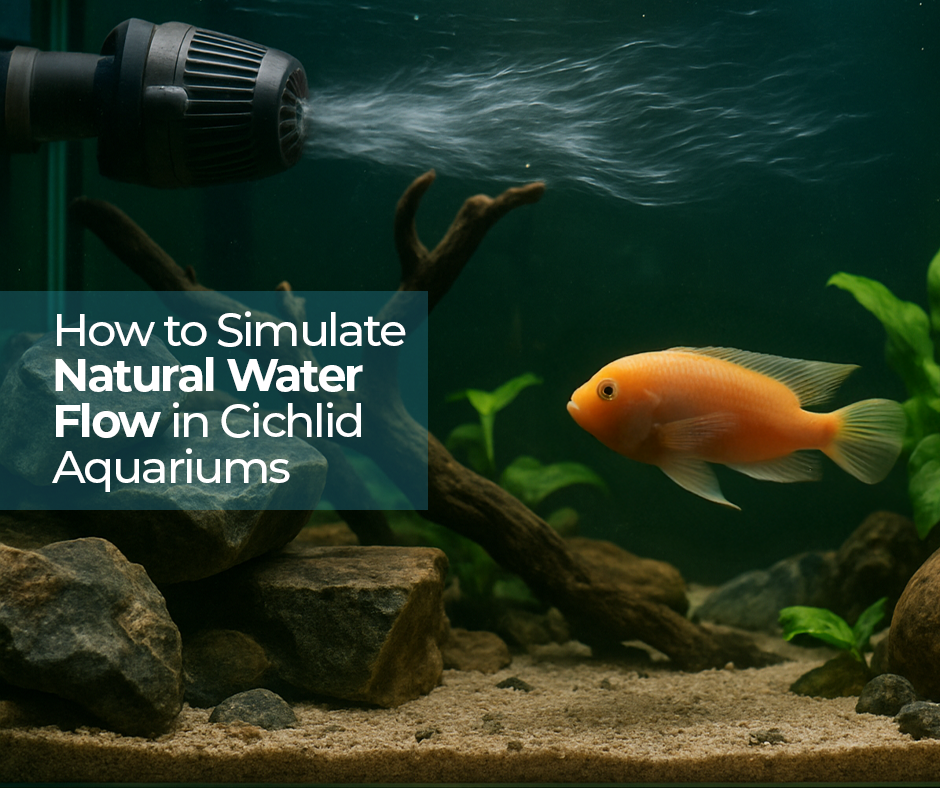
Simulating natural water flow in cichlid aquariums is key to replicating the habitats these fish evolved in. Cichlids hail from diverse environments—from the rocky shores of Lake Malawi to river systems in South America—each species responds to different water movement patterns. In the wild, gentle currents sweep across rocky substrates, delivering oxygen and nutrients while carrying away waste. Recreating these conditions in home aquariums helps cichlids display natural behaviours, maintain health, and reduce aggression.
This guide will take you through understanding flow dynamics, selecting equipment, arranging currents, and fine‑tuning your setup so that your cichlid tanks become closer to their native ecosystems.
Understanding Water Flow and Turnover
Flow refers to the movement of water within the tank—created by pumps, power heads, or filters—while turnover is the total volume of water passed through the filtration system each hour (Additional information about Flow and Turnover – The Fish Room TFR).
In Lake Malawi, most cichlids inhabit shallow, rocky coastal waters where currents range from slow eddies around boulders to moderate channels between outcrops. Mimicking both laminar streams (smooth currents) and turbulent pockets (eddies) encourages natural foraging, territorial displays, and breeding behaviours, especially in rock‑dwelling mbuna species.
Why Simulate Natural Flow in Cichlid Tanks
- Improved Oxygenation: Increased surface agitation from proper flow boosts gas exchange, keeping oxygen levels high—vital for active swimmers like utaka and pelagic cichlids.
- Efficient Waste Removal: Strategic currents carry detritus toward intake points, reducing dead zones where harmful ammonia and nitrite can accumulate.
- Behavioural Enrichment: Many cichlids naturally patrol currents to feed or defend territories. Simulated flows strengthen muscles, reduce stress, and promote vibrant colouration.
Essential Equipments:
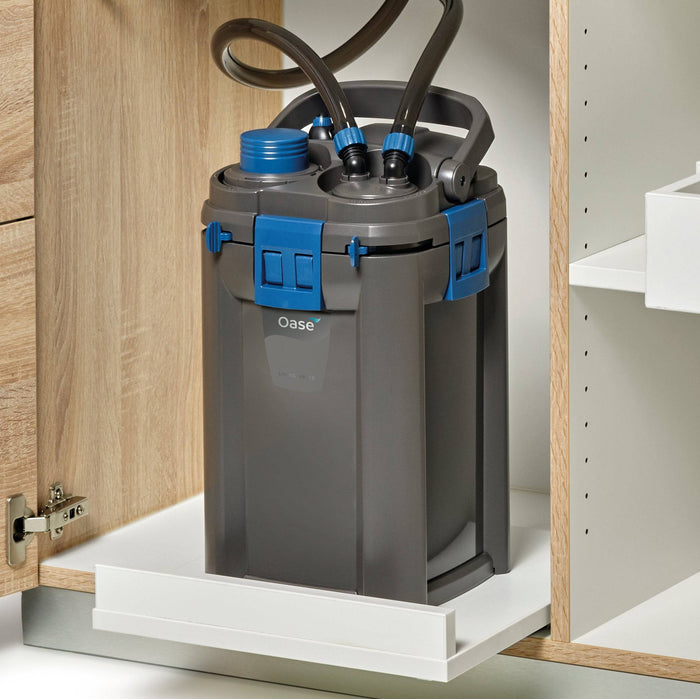
1. Canister Filters & Sumps
Offer high flow rates and can be customised with additional equipment (e.g., refugiums).
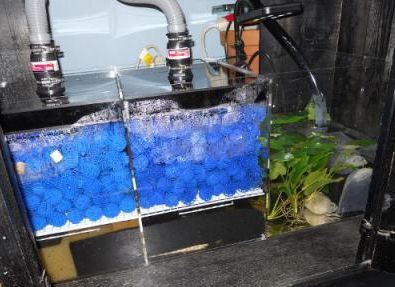
- High Flow & Custom Media: Modern canisters routinely push 300–600 GPH (gallons per hour), while sumps can be plumbed for 1,000 GPH or more—just size your plumbing and pump accordingly. You can stack mechanical (sponges), biological (ceramic rings) and chemical (activated carbon or phosphate removers) media in stages, then add a refugium section to boost biodiversity and nutrient export.
- Quiet & Hidden: Installed below the display tank, canisters and sumps keep equipment out of sight and noise to a minimum; many hobbyists use flexible tubing with quick-disconnects for easy maintenance swaps.
2. Powerheads & Wavemakers
Compact, directional pumps; aim for one per 20–30 gallons to create varied currents.
- Directional & Variable: Brands like EcoTech and JVP offer variable-speed controllers so you can simulate dawn-to-dusk wave patterns or random “storm” pulses; mount with magnetic brackets and aim them at rockwork to carve realistic eddies.
- Sizing & Placement: A good rule is one 200–400 GPH pump per 20 gal, but balance multiple heads at different heights—near substrate for bottom flow, mid-water for general circulation, and just below surface to break film and oxygenate.
3. Spray Bars
Evenly distribute return flow along the back wall, producing a broad, gentle current.
- Even Distribution: Typically made from ½″–¾″ PVC, drill 1.5–2 mm holes at 2–3 inch intervals; long bars (as wide as your tank) prevent “jetting” and smooth out flow over the entire back wall.
- Adjustability: Use sliding mounts or extra valves so you can dial back one end if you notice “hot spots,” and swap to larger hole diameters for heavier bioload systems to avoid clogging.
4. Hang-On-Back (HOB) Filters
Versatile and easy to angle; can be turned sideways or upside‑down to generate surface agitation and mid‑water flow.
- Multi-Angle Returns: Flip the return spout up, down or sideways to target surface agitation or mid-levels; pairing a medium-sized HOB (rated at 4–6× tank volume) with a powerhead can cover both mechanical filtration and directional flow.
- Media Customisation: Many HOBs accept standard cartridges, but you can remove cartridges and replace them with mesh bags of bio-rings, carbon pellets or phosphate sponge to match your tank’s specific needs.
5. Flow Diffusers & PVC Diverters
Break up strong jets into natural‑feeling turbulence by attaching elbows or perforated tubing.
- Breaking Up Jets: Attach 90° or 45° elbows and short lengths of perforated tubing directly to pump outlets—this creates dozens of small jets instead of one strong blast, mimicking natural turbulence.
- DIY Manifolds: For more control, glue a PVC “T” or “cross” manifold on the return line, then cap off unused outlets or connect additional valves so you can precisely split and throttle flow to multiple zones (e.g., caves, open areas, surface).
Related Topics:
- Finding the Perfect Filter for Your Fish Tank
- LiveAquaria’s guide on proper flow rates and equipment
Placement and Flow Patterns
- Rock Caves & Overhangs: Position power heads above rock piles so water washes through crevices, flushing waste from hiding spots.
- Open‑Water Zones: Use opposing pumps on opposite side walls to create a gentle circular current, ideal for mid‑water swimmers.
- Surface Agitation: Angle returns just under the surface to break tension, optimising oxygen exchange without producing harsh ripples.
- Eliminate Dead Spots: Move a net or chopstick through the tank; if it hangs in place, redirect a nearby flow head to sweep that area.
Calculating and Tuning Turnover Rates
- General Freshwater Baseline: Target 4–6× the tank volume per hour for adequate filtration in planted or lightly stocked setups.
- Rule of thumb for Cichlid Tanks: To manage larger bioloads and replicate turbulence in lake currents, aim for 8–10× turnover.
- Turnover Formula: A precise method uses t = 9.2 × (gallons / gph), where t is time (minutes) to cycle 99.99% of water; adjust pumps to hit your target turnover.
- Fine‑Tuning: Install inline valves or adjustable impellers to dial flow up or down; add or reposition wavemakers until currents feel natural.
Observing Fish Behaviour
- Active Exploration: Healthy cichlids will patrol open zones and dart through currents; constant hiding may signal excessive flow.
- Current Interaction: Species that lean into the flow—such as utaka—thrive in stronger streams; observe where they group.
- Breeding Comfort: For mouthbrooders and substrate spawners, create low‑flow pockets near breeding caves where eggs and fry can develop safely.
Maintenance and Troubleshooting
- Monthly Impeller Cleaning: Debris buildup cuts flow and alters patterns; remove and rinse impellers in tank water.
- Inspect Plumbing: Sharp turns and clogged fittings can reduce output by up to 20%; replace tubing or use larger-diameter pipes for smoother flow.
- CO₂ & Plant Considerations: Strong currents can strip CO₂ from planted setups; if plants struggle, reduce flow or supplement CO₂ injection.
- Regular Flow Checks: Keep an eye on visible currents—what feels right one month may shift as algae or detritus accumulates.
Conclusion
By understanding flow dynamics and applying strategic equipment placement, you can recreate the currents cichlids evolved in. Consistent turnover, targeted flow patterns, and routine maintenance will keep your cichlid tanks oxygenated, clean, and behaviourally enriching. Watch your fish, make small adjustments, and you’ll turn any aquarium into a living slice of their native habitat—vibrant, active, and healthy.