Water flow is a defining force in freshwater ecosystems, setting the stage for how fish species feed, defend territories, and reproduce. In general pattern, velocity and turbulence determine oxygen levels, nutrient delivery, substrate stability, and the types of microhabitats available—and in turn shape the behaviour and spawning success of cichlid fishes and other species.
Summary
Velocity & Turbulence: Govern oxygenation, nutrient delivery, substrate stability and microhabitat formation.
Ecological Impact: Shapes feeding strategies, territorial defence and reproductive success.
Lake Tanganyika:
Low-flow zones: Specialists (molluscivores, limb-girdle predators).
Moderately turbulent littoral: Mbuna grazers on rock surfaces.
Lake Malawi:
Mbuna & non-mbuna: Select sandy shallows or open water.
Spawning sites: Balance egg oxygenation with current protection.
Lake Victoria: Similarly diversified, with species adapted to local flow regimes.
Territory & Courtship:
Substrate-spawners clear nests and guard against predators and currents.
Mouth-brooders seek calm backwaters to carry eggs/fry in the buccal cavity.
Sensory Drive: Sexual displays evolve to be conspicuous in fast currents or subtle in still water.
Substrate Spawners (e.g., mbuna, Tropheus):
Excavate pits or clean stones.
Rely on moderate flow for egg oxygenation and silt prevention.
Parents fan clutches to enhance gas exchange.
Mouth Brooders (e.g., Lake Malawi haps):
Spawn directly into female’s mouth.
Use low-flow refuges for protection over continuous flow benefits.
Habitat: Slow-moving lake margins and low-current river valleys in Central America.
Spawning Sites: Natural caves or overhangs; up to 1,000 eggs on hard substrates.
Parental Care: Both sexes guard the nest; moderate flow ensures oxygen without destabilising eggs.
Early Life-History: Current strength influences larval dispersal, yolk-sac absorption timing and free-swimming onset.
Gene Expression: Hydrodynamic forces correlate with fin morphogenesis and sensory gene regulation (e.g., Neolamprologus brichardi).
Energetic Trade-Offs: In fast currents, fish reduce courtship intensity and choosiness to conserve energy (observed in guppies; parallels expected in cichlids).
Trait Evolution: Display intensity, territory choice and mate preference adapt to local flow conditions.
Wild Populations: Damming, irrigation and climate change can disrupt natural flow regimes, threatening spawning success and biodiversity.
Aquarium Management: Replicating species-specific water movements maximises healthy breeding behaviour, parental care and developmental success.
African Cichlids in Rift Lakes
African cichlids have radiated into hundreds of species across the Great Rift Lakes—Lake Tanganyika, Lake Malawi, and Lake Victoria—each with distinct adaptations to local water movements and habitats. In Lake Tanganyika’s deep basins, low‐flow zones host specialist molluscivores and limb‐girdle predators, while the rock‑draped, moderately turbulent littoral supports aggressive mbuna grazers.
Lake Malawi’s mbuna and non‑mbuna species exploit sandy shallows or open water, selecting spawning sites that balance egg oxygenation with protection from strong currents.
(For an overview of cichlid diversity, see FishBase – Family Cichlidae).
Behavioural Adaptations to Water Movements
Flow regimes profoundly influence how cichlid fishes establish territories and court. Substrate‑spawning species often clear patches of rock or sand and guard their nests against both predators and disruptive currents, while mouth brooders rely on calmer backwaters to ferry eggs in their mouths during developmental staging.
The sensory drive hypothesis predicts that sexual selection will align with these local hydrodynamic conditions—fish in fast currents evolve conspicuous displays or specialised fin‐motions that cut through turbulence, while those in still water favour subtle visual cues.
Spawning Behaviour and Site Selection
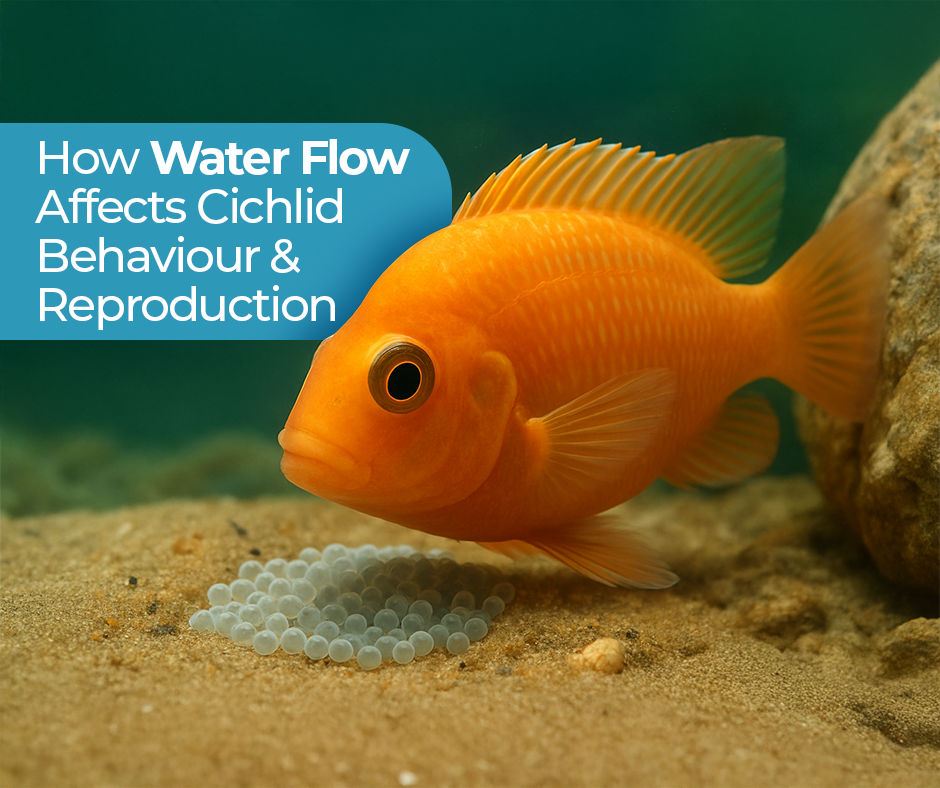
Spawning behaviour in African cichlids splits broadly into two strategies. Substrate spawners (e.g., many mbuna and Tropheus species) excavate pits or clean flat stones, relying on moderate flow to continuously oxygenate the eggs while preventing siltation. Here, males and females coordinate courtship rituals—circling, lead‑swims, and anal‑fin flares—until the female deposits eggs and the male externally fertilises them.
Females then fan the clutch to maintain water movements over the eggs, enhancing gas exchange during key developmental stages. Mouth brooders (e.g., many Lake Malawi haps) spawn directly into the female’s buccal cavity and carry eggs and early fry in a low‑flow refuge, trading off the benefits of continuous water flow for parental protection.
Case Study: Midas Cichlids in the Central American Great Lakes
Although best known from East Africa, cichlid species have also diversified in the “Great Lakes” of Central America. Midas cichlids (Amphilophus citrinellus) favour slow‑moving or tranquil lake margins and will penetrate lower river valleys where currents are minimal.
They spawn in natural caves or under overhangs, depositing up to 1,000 eggs on hard substrates; both males and females guard the site against intruders. Here, the moderate water flow balances oxygen supply with the need for a stable spawning site, illustrating the general pattern seen in substrate spawners worldwide.
Flow Influence on Developmental Staging and Gene Expression
Beyond behaviour, water flow can shape early life‑history. Variations in current strength alter larval dispersal and substrate retention, potentially shifting the timing of developmental staging milestones such as yolk‐sac absorption and free‑swimming onset.
At the molecular level, flow regimes have been linked to differential gene expression in fin morphogenesis and sensory systems: for instance, studies on Neolamprologus brichardi demonstrate that ornamental fin shapes correspond with distinct patterns of gene expression during early development, suggesting that hydrodynamic forces may drive regulatory changes in cichlid genomes.
Sexual Selection Under Flow Regimes
Included studies on other freshwater fishes show that flow can directly modulate sexual selection: guppy males perform fewer courtship displays and become less choosy under current compared to still water, indicating a trade‑off between mating effort and swimming cost (Sexual Display and Mate Choice in an Energetically Costly Environment – PMC).
In cichlids, similar dynamics likely play out, with males and females adapting their display intensity, territory location, and choosiness to local water movements, thus influencing mate choice and the evolution of sexually selected traits.
Conservation and Aquaculture Implications
Recognising how water flow affects cichlid behaviour and reproduction is vital for conservation in wild rift lakes—where damming, irrigation, and climate change alter flow patterns—and for aquaculture or aquarium management. Maintaining appropriate water movements ensures healthy spawning behaviour, successful female reproductive care, and optimal developmental staging, safeguarding both biodiversity and the sustainability of cichlid species in managed systems.